Garage door safety sensors help stop a closing door when a person, pet, car, or object breaks the beam. Garage door safety sensors work as a pair, with one sending an invisible beam and the other receiving it. When the beam is blocked or misaligned, the opener may stop, reverse, or refuse to close.
A garage door that will not close can leave your home or business open. It may also point to a simple sensor problem, such as dust, a loose bracket, or an item in the way. This guide explains what to check first and when Beaver Dam Garage Door Repair should inspect the system.
Table of Contents
- How do garage door safety sensors work?
- Why will my garage door not close?
- What do the garage door sensor lights mean?
- How do you clean garage door safety sensors?
- How do you realign garage door safety sensors?
- Can you bypass garage door safety sensors?
- When should you call a garage door repair professional?
- Key takeaways
- Frequently Asked Questions
- Conclusion
How do garage door safety sensors work?
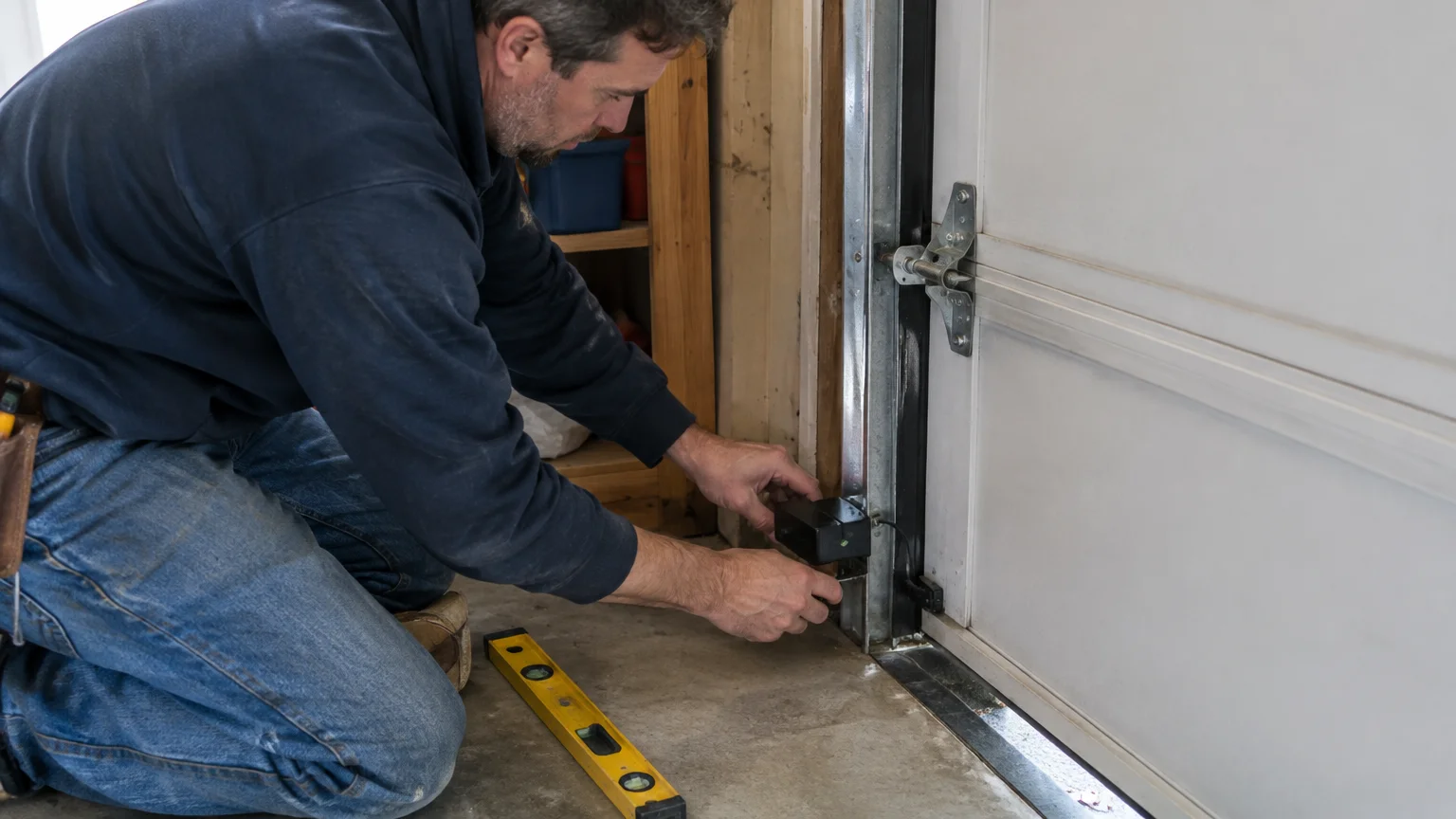
Garage door safety sensors are small electronic units near the bottom of the door tracks. They work together as a pair. One unit sends an invisible infrared beam, and the other unit receives it. Infrared is light that people cannot see.
What each sensor does
One sensor sends the beam. The other sensor receives it. Both units must face each other across the garage opening. They also need to sit at nearly the same height.
The sensors often attach to the vertical tracks or to small nearby brackets. A bin, car, tool, or stored item can bump one out of place. Dust, cobwebs, and moisture can also weaken or block the beam.
When the receiving sensor gets the beam, the opener knows the opening is clear. The opener can then close the door during normal use. This garage door safety feature helps protect people, pets, cars, and other property.
How the opener uses the sensor signal
The opener checks the sensor signal during each closing cycle. If the signal stops, the opener may stop the door or send it back up. This explains why a garage door may open normally but refuse to close.
Garage door safety sensors do not control every part of the opener. A broken spring, bent track, worn roller, weak motor, or bad wall control can cause similar signs. A full check is better than assuming the sensors are always at fault.
Beaver Dam Garage Door Repair can help property owners tell a simple sensor issue from a larger door or opener problem. A careful check matters because garage doors are heavy. Springs and cables can also hold a great deal of force.
Why will my garage door not close?
A garage door may not close because something blocks the sensor beam. The sensors may also be dirty, out of line, or poorly connected. Start by checking both sensors and the space beneath the door.
Blocked or interrupted sensor beams
Look for toys, tools, bins, leaves, or other items near the bottom of the tracks. Even a small object can break the beam. Move the item away, then try the wall button while standing clear of the door.
Look at both sensor lenses for dust, webs, or water drops. Do not touch the door, springs, cables, or tracks while testing. If the door works after the item is removed, the cause may have been a simple blockage.
A sensor wire may also be loose, pinched, pulled, or cut. Leave electrical testing inside the opener to a trained garage door technician. Working inside the opener without the right care can cause injury or damage.
Other causes of stopping or reversing
A door may stop or reverse because its travel settings are wrong. A bent track or damaged roller can also affect movement. A worn garage door spring may make the door heavy or uneven.
A door that feels heavy, moves crookedly, or makes a loud snap needs prompt attention. Do not keep pressing the button again and again. Repeated attempts may strain the motor or make a mechanical problem worse.
If the motor runs but the door does not move, garage door opener repair may be needed. Beaver Dam Garage Door Repair can check the opener, door hardware, wiring, and sensors together.
What do the garage door sensor lights mean?
The sensor lights give clues about power and beam contact. A steady light often means a sensor has power and is lined up. Light colors and patterns vary by opener brand and model.
Steady and flashing lights
Steady lights on both sensors often suggest that the beam is complete. If one light is dark, that sensor may lack power. A loose wire or failed unit can cause the same sign.
If one light flashes, the sensor may be out of line. The bracket may also shake when the door moves. Look at the lights while checking whether either bracket feels loose. Do not bend or move the track to fix the sensor.
What different light patterns can indicate
Your opener manual gives the best meaning for a specific light pattern. If the lights do not match the manual, the sensors may need cleaning, alignment, wiring repair, or replacement.
Common clues include:
- One dark light may point to a power or wiring issue.
- One flashing light may point to poor alignment.
- Both lights may look normal while another opener fault remains.
- Lights that change when a wire moves may point to a loose connection.
- A door that reverses with clear lights may have resistance or travel trouble.
The lights are useful clues, but they do not give a full diagnosis. A professional can test the signal and check the rest of the door system without guessing.
How do you clean garage door safety sensors?
You can often clean garage door safety sensors with a soft, dry cloth. Turn off the opener before cleaning. Keep your fingers away from moving parts, and never spray liquid onto the sensor or wiring.
Safe cleaning steps
Use this simple process:
- Close the door if it is safe, then disconnect opener power.
- Remove leaves, webs, and items from the sensor area.
- Wipe each lens with a clean, soft, dry cloth.
- Check the brackets and wires for damage or looseness.
- Restore power and test the door from a safe place.
The lens is the small clear part on the front of the sensor. Use only light pressure. A rough cloth may scratch the lens and make it harder for the sensor to receive the beam.
After cleaning, watch the indicator lights. If both lights are steady but the door still will not close, another fault may be present. The opener may need testing, or one sensor may have failed.
Common cleaning mistakes to avoid
Do not spray glass cleaner, oil, or water directly onto the sensor. Liquid may reach the wiring or circuit board. Do not scrape the lens with a blade, screwdriver, or other hard item.
Do not use cleaning as a reason to touch springs, cables, rollers, or lift brackets. These parts may move without warning or hold stored force. Cleaning should involve only the sensor face and the nearby area.
If a sensor stays dark after the opener has power, stop there. Wire or part testing may be needed. A garage door repair technician can find the fault without creating a new safety risk.
How do you realign garage door safety sensors?
To realign garage door safety sensors, make sure both units face each other. They should sit at the same height and stay firm on their brackets. Small changes may restore the beam, but test the door with care afterward.
Checking sensor position and alignment
First, look across the doorway from one sensor to the other. Both units should point straight across the opening. A sensor facing the floor, wall, or ceiling may not send the beam to its partner.
Check for a bent, loose, or twisted bracket. Tighten only a bracket fastener if it is clearly loose and safe to reach. Do not loosen track bolts or move the vertical track.
You may use a level if you can do so without placing your hands near moving parts. The sensors do not need perfect building-level placement. They do need to line up with each other and face directly across the opening.
Testing the door after adjustment
Restore power and test the door from the wall control. Keep children, pets, cars, and other people away from the opening. The door should move smoothly and respond without reversing for no clear reason.
A basic safety check uses a suitable object across the beam while the door is open and the area is clear. Never stand under a moving door. Follow the opener manual because test methods can differ by model.
If the alignment changes again, the bracket may be bent or the track may move during operation. That points to a mechanical problem, not just a sensor adjustment. Garage Door Off Track Repair or Garage Door Maintenance may be the better next step.
Can you bypass garage door safety sensors?
A homeowner should not bypass garage door safety sensors. Bypassing them removes a safety feature that helps stop the door when something breaks the beam. It may allow the door to close on a person, pet, car, or object.
Why bypassing the sensors is unsafe
Taping a sensor aside, joining wires, or holding the wall button can defeat part of the safety system. The door may close without its normal beam check. A heavy door can cause serious injury or property damage.
A bypass may also hide a broken wire, failed sensor, bent bracket, or opener fault. It can make later testing harder. It also leaves the garage less secure.
The safer choice is to keep the door open only when you can watch it and the opening is clear. If the door is stuck open, keep children and pets away until the system is repaired.
When sensor replacement or repair is needed
Replacement may be needed when a sensor stays dark, has a cracked lens, or fails after cleaning and alignment. Repair may be needed when the wire, bracket, or mounting point is damaged.
Some sensor parts work only with certain opener brands. The replacement must match the opener system and wiring. A technician can confirm the right part and test the safety response after fitting it.
Do not assume a new sensor will fix every closing problem. The opener, tracks, springs, rollers, and travel settings can all affect movement. A full check can help prevent repeat failures.
When should you call a garage door repair professional?
Call a garage door repair professional when cleaning and a basic visual check do not solve the problem. Professional help is also needed when the door is stuck open, hard to move, or showing signs of a mechanical or electrical fault.
Warning signs of an electrical or opener fault
Professional help is recommended when:
- The sensor lights stay dark after power and wire checks.
- The door reverses even when the beam path is clear.
- The opener hums, clicks, or runs without moving the door.
- The door is heavy, crooked, noisy, or partly off its tracks.
- A spring, cable, roller, or bracket looks broken.
- The sensor position changes again after adjustment.
A broken spring or cable should not be treated as a sensor issue. These parts can release stored force. Garage Door Cable Repair, Garage Door Opener Repair, or Garage Door Installation may help, based on what the inspection finds.
What to expect from a safety sensor repair visit
A technician will ask about the symptoms and inspect both sensors. They may check the wiring, test the opener response, and review the door’s movement. The tracks, rollers, springs, cables, and balance may also need a check.
The repair plan should explain what failed and what work is needed. The right service depends on the opener model, sensor condition, access, and any door damage.
Beaver Dam Garage Door Repair serves homeowners, businesses, and property owners in the main Beaver Dam area. Help may also be needed in South Beaver Dam, Beaver Edge, Waupun, Horicon, Juneau, Columbus, and nearby communities when a door will not close.
For an urgent problem, a technician may first secure the opening. The repair should address the fault found, not bypass the safety system.
Key takeaways
- Garage door safety sensors use an invisible beam to check the opening.
- Dust, objects, loose brackets, and damaged wires can break the signal.
- Stable lights often suggest alignment, but patterns vary by opener.
- Cleaning and careful alignment are reasonable first checks.
- Bypassing sensors is unsafe and may hide a larger repair problem.
Frequently Asked Questions
Why does my garage door open but not close?
A door may open but not close when the safety beam is blocked, dirty, or out of line. A loose wire, damaged sensor, or opener fault can cause the same sign. Check the sensor area without touching moving parts. If the lights stay abnormal or the door still reverses, professional testing is safer.
Should both garage door sensor lights be on?
Both lights should usually show power and a stable beam when the sensors line up. The exact colors vary by opener brand. A dark or flashing light may point to alignment, wiring, or sensor trouble. Your owner manual gives the best meaning for that light pattern.
Can sunlight affect garage door sensors?
Strong sunlight can sometimes affect the receiving sensor. This is more likely when sunlight shines straight into the lens. A small position change may help, but the unit must still face its partner. If the issue continues, a technician should check the sensors and opener.
How often should garage door sensors be cleaned?
There is no set cleaning schedule for every garage. Check the lenses when the door will not close or when dust, webs, or moisture appear. A soft, dry cloth is usually enough. Regular Garage Door Maintenance can also help find loose brackets and damaged wires.
Who services garage doors near me?
A local garage door repair professional can service sensors, openers, tracks, springs, cables, and other parts. Beaver Dam Garage Door Repair helps property owners and nearby communities with doors that stop, reverse, or will not close.
Conclusion
Garage door safety sensors are small, but they play a key role in safe closing. A blocked beam, dirty lens, or shifted bracket may be simple to fix. A dark light, damaged wire, heavy door, or repeated reversal needs more care.
Never bypass the sensors to force the door shut. Keep people and pets clear, avoid springs and cables, and seek help when cleaning or a visual check does not solve the issue. For urgent garage door repair in Beaver Dam, Contact us today to arrange a safe inspection and repair.
If you are not sure what you are dealing with, it is worth having someone look at it before it turns into a bigger job. Get in touch with Beaver Dam Garage Door Repair today and we will tell you where you stand.